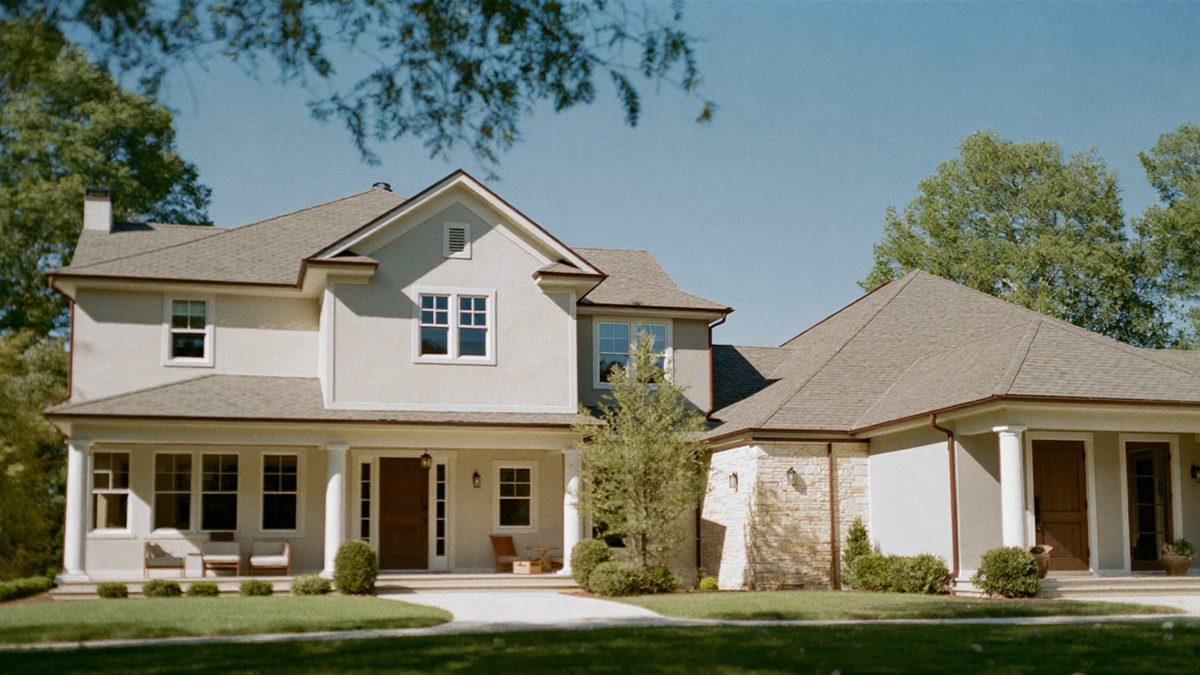
West Michigan Market Report: Prices, Inventory, and What It Means
If you want to understand the West Michigan housing market, the worst place to look is a national headline. "Home prices fall," "buyers flee the market," "the bubble is bursting", those stories are written about the country as a whole, and real estate doesn't work as a country. It works block by block, town by town. West Michigan has its own supply, its own demand, and its own logic, and it rarely moves in lockstep with whatever the national story is that week.
So instead of chasing headlines, let me give you a framework for reading our market the way it actually behaves, what to watch, what it means for you, and why the local picture so often differs from the national one. This is the lens I use, and it'll serve you whether you're buying, selling, or just trying to stay informed.
The Two Numbers That Tell the Story
Strip away the noise and a local market really comes down to the relationship between two things: how many homes are for sale (inventory) and how many people want them (demand). When inventory is tight and demand is healthy, which has been the persistent story across much of West Michigan, homes sell faster and prices hold firm or climb, and sellers have the upper hand. When inventory builds faster than buyers show up, the balance tips, homes sit longer and price growth cools. Watch those two forces and you'll understand more about our market than any headline will tell you.
Why West Michigan Marches to Its Own Beat
Our region has some durable tailwinds that keep it from mirroring national swings. People keep moving here, drawn by the lakeshore, the lower cost of living relative to bigger metros, and a quality of life that's increasingly hard to find. At the same time, we haven't built homes fast enough to keep up with that demand, which keeps inventory tight and supports values even when national sentiment sours. That combination, steady in-migration plus limited supply, is why "the market is crashing" headlines often don't match what I'm seeing at the closing table here.
What It Means If You're Buying or Selling
For buyers, a tight market means being ready matters, financing lined up, pre-approval in hand, and a willingness to act decisively when the right home appears, because good ones still move. It doesn't mean overpaying or waiving every protection; it means preparation beats hesitation. For sellers, firm demand is good news, but it's not a license to overprice, the homes that sell fast and for top dollar are the ones priced right and presented well from day one. In any market, the fundamentals win: buy smart and prepared, sell priced and polished.
Don't Try to Time It Perfectly
People love to ask whether they should wait for prices to drop or rates to fall. The honest answer is that nobody reliably times the market, not me, not the economists. The better question is whether a move makes sense for your life and your finances right now. If it does, the right home at a fair price in a market with solid fundamentals is rarely a decision you regret, and waiting for a perfect moment that may never come has its own cost. Decisions based on your situation tend to age a lot better than decisions based on predictions.
The Bottom Line
West Michigan's market has its own engine, steady demand from people moving in and a limited supply of homes, which is why it so often shrugs off the national doom-and-gloom. Read it through inventory and demand, not headlines, and base your move on your life rather than a forecast. I keep my finger on this market every single day, so if you want a current, no-spin read on what's happening where you're looking, reach out, and I'll tell you what I'm actually seeing on the ground.