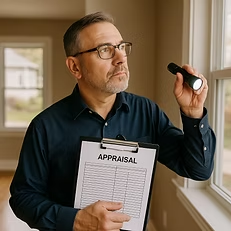
What to Do If Your Home Doesn’t Appraise for the Sale Price
You finally accept an offer. The buyer's financing looks solid. Then the lender's appraisal comes back lower than the price you agreed on, and the stress hits. Here's the truth worth holding onto: a low appraisal doesn't automatically kill a deal. It just starts a new conversation. The sellers who panic lose the deal; the ones who stay calm and come armed with data usually save it.
Why It Happens
Appraisers follow strict federal guidelines and local market data, they're not weighing emotion or a bidding war, just recent comparable sales. So a low value usually traces to one of a few causes: limited comps (few similar homes sold nearby recently), an overheated bidding situation that pushed the price past market value, condition issues like deferred maintenance, or simple timing, because sales-lag data may not reflect this month's hot demand. In Michigan, that last one bites hardest along the lakeshore and in fast-growing townships, where values can move faster than appraisals can keep up.
Read the Report Carefully
Your first move is to get a copy of the appraisal through your lender or agent and actually read it. Look for incorrect square footage, missing upgrades, and out-of-area or outdated comparables. Small factual corrections can make a surprisingly big difference, an appraiser working from thin or stale data is more common than people assume, and it's fixable.
File a Reconsideration of Value
If you and your REALTOR® can show the appraiser missed relevant comps, your lender can submit a Reconsideration of Value request. The strongest packages include three to five better comparable sales within a mile, closed in the last 90 days, proof of major upgrades like a new roof or kitchen remodel, and market-trend data showing appreciation since the last quarter. Appraisers do adjust sometimes, especially when the original data was weak, so it's worth building the case properly rather than just objecting.
Renegotiate the Gap
If the value still won't move, it's time to talk numbers. Buyers can ask the seller to reduce the price, split the difference, or bring cash to cover the gap. Sellers can hold firm if other buyers are waiting, or offer concessions elsewhere, closing costs, flexible possession. I've seen plenty of creative middle-ground deals in West Michigan where the buyer brought an extra $5,000 to $10,000 and the seller met them halfway, and everyone left the table satisfied. A low appraisal is a negotiation, not a verdict.
One Appraisal Isn't Forever
It's also worth remembering that the number isn't permanent. If financing or the lender changes, a new appraisal can be ordered after a short waiting period. For FHA and VA loans the value typically sticks to the property for 120 days, but switching to a conventional loan can reset the playing field entirely. Knowing your loan type tells you how much room you actually have.
Keep Perspective
A low appraisal isn't a reflection of what your home is worth to you, it's a reflection of cautious math at a single moment in time. Markets catch up, buyers refinance, and values rise again. And if this particular deal doesn't close, it usually just means the next one gets built on stronger footing.
The Bottom Line
Low appraisals sting, but they're fixable. The whole game is staying calm, coming armed with data, and leaning on an agent who's been through it before.
If you're facing a low appraisal in West Michigan, I'll help you analyze the report, craft the rebuttal, and protect your position without losing the deal. Because in real estate, knowledge isn't just power, it's peace of mind.