Property Line Disputes and Boundary Surveys in Michigan
You'd be amazed how many Michigan property disputes start over a few inches, a fence post, a tree, the edge of a driveway. It sounds trivial until you remember that under state law, those few inches represent legal ownership of one of your most valuable assets. Knowing exactly where your property begins and ends isn't just about keeping the peace with your neighbor; it's about protecting what you actually own.
Here's how boundary issues happen in Michigan, and how to handle, or better yet prevent, them.
Why These Disputes Start
Most boundary conflicts trace back to a handful of causes: old or missing surveys, misread subdivision plats, shared driveways or fences built without permits, and encroachments where a shed, deck, or row of landscaping quietly crosses into the next parcel. A homeowner in Fruitport Township put up a fence assuming their lawn ran to a line of trees. The survey later showed the fence sat two feet into the neighbor's lot, which meant partial removal and a title correction. Nobody was acting in bad faith, they just trusted the trees instead of the survey.
What a Boundary Survey Actually Does
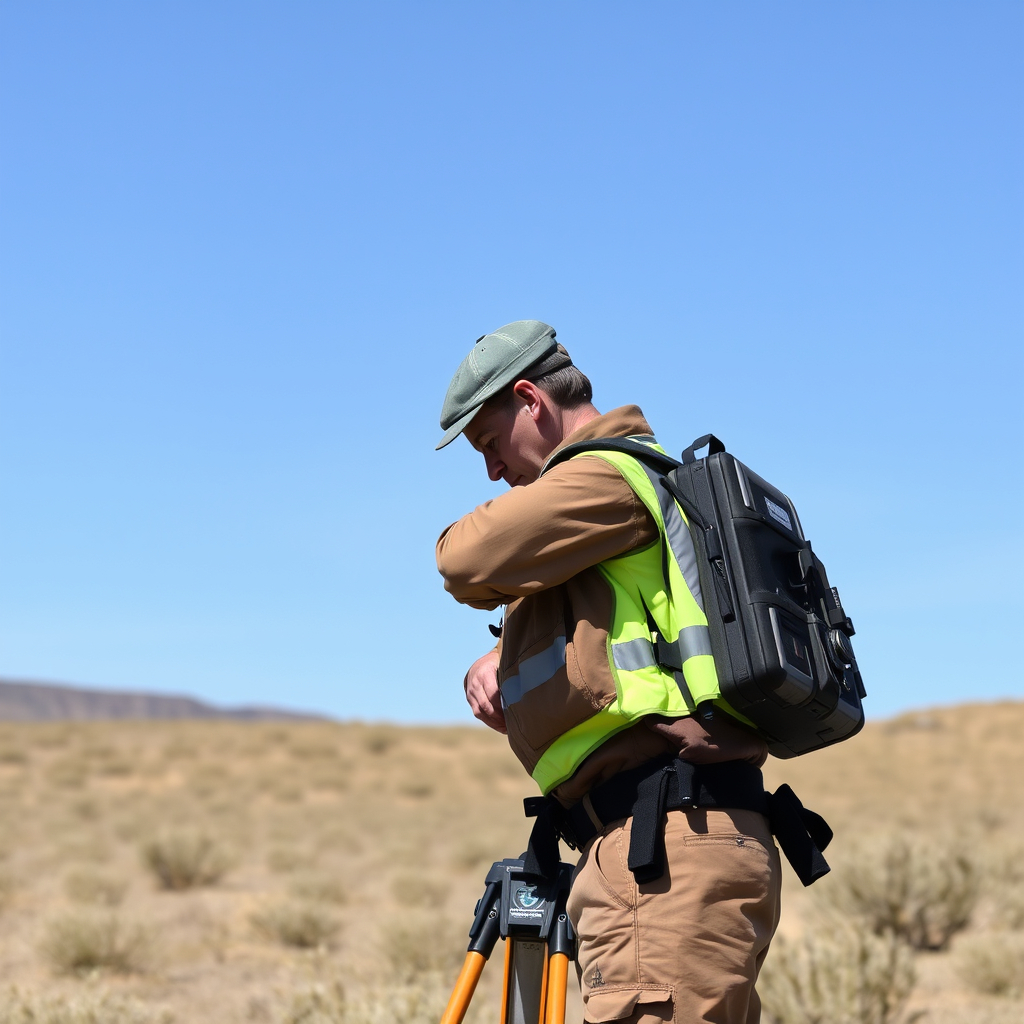
A boundary survey is the most accurate way to confirm property lines, and in Michigan only a licensed professional surveyor can establish or certify them. A proper survey ties the legal description from your deed to physical corner markers (iron stakes or pins), maps the location of fences, buildings, and any encroachments, and shows easements and right-of-way lines. When you order one, ask for the sealed report and the survey sketch, not just the plat map from your title company. The plat shows the subdivision; the survey shows your lot as it actually sits.
Finding Your Lines
Start with your closing documents, sometimes a plot plan is tucked in there. Your county Register of Deeds or local assessor can provide plat records. For real accuracy, hire a licensed surveyor, which runs roughly $500 to $1,000 for most residential lots. And a caution that trips people up: many West Michigan municipalities now offer GIS property maps online, but those are for general reference only and are not legally binding. Don't make a fence decision based on a screen.
When a Neighbor Has Crossed the Line
If a fence, shed, or driveway is encroaching on your land, the move is to stay calm, many owners genuinely don't realize it. Review your deed and survey before you do anything, document the issue with photos and notes, and raise it politely in writing first. If it stays unresolved, a real estate attorney can help you file a quiet-title action or a boundary-line agreement. And know one Michigan wrinkle: property lines can legally shift through adverse possession after 15 years of open, continuous use, though it's rare and very fact-specific. That's exactly why acting early matters, time can work against you.
Preventing the Problem Entirely
Before you install a fence, build a shed, or add an addition, get the property surveyed, follow your township's setback rules, and never treat an old fence or a line of bushes as an "official" border. In Norton Shores, for instance, accessory structures often require at least a 5-foot setback from side and rear lot lines, exactly the kind of detail you verify with the zoning department before you build, not after a complaint.
Fixing It on Paper
Neighbors can resolve small overlaps with a boundary agreement, which has to be signed by both owners and recorded with the county Register of Deeds to count. For more significant changes, a lot-line adjustment or land-division application goes through the township under Michigan's Land Division Act (PA 288 of 1967). The common thread is recording, a handshake fix that never makes it to the Register of Deeds isn't really a fix.
The Bottom Line
Boundary disputes are stressful, but they're solvable when you know the rules and act early. The whole game is documentation, communication, and the right professionals in your corner before a few inches becomes a lawsuit.
If you're buying, selling, or building in West Michigan, I can help you review your survey and connect you with trusted local surveyors so your land, and your peace of mind, are fully protected. Because good fences may make good neighbors, but good boundaries make confident homeowners.